
Mammals are the vertebrate animals of the class Mammalia, whose young are fed on milk from the mother’s mammary glands. Hair or fur, three small bones in the middle ear and a lower jaw made of a single bone mark them out from every other class of animals. The Mammal Diversity Database of the American Society of Mammalogists recognises 6,791 living mammal species in its version 2.5, released on 28 July 2026: 6,774 wild species and 17 domestic ones, sorted into 27 orders. It also lists 113 recently extinct species.
Mammals at a glance
- Scientific class: Mammalia, part of the vertebrates
- Living species: 6,791 (Mammal Diversity Database v2.5, July 2026)
- Orders: 27 living orders
- Three living groups: monotremes (5 species), marsupials (410) and placental mammals (6,376)
- Largest order: rodents, with 2,766 species, followed by bats with 1,506
- Where they live: every major habitat, from deserts and the Arctic to the open ocean and the air
- Largest: the blue whale, up to 110 feet long and 330,000 pounds
- Largest on land: the African bush elephant, 9,900 to 13,500 pounds
- Smallest: Kitti’s hog-nosed bat by length, the Etruscan shrew by weight, both about 2 grams
- Fastest on land: the cheetah, 60 to 70 mph in short sprints
- Longest lived: the bowhead whale, estimated at up to about 211 years
- Threatened: 26 percent of assessed mammal species (IUCN Red List, version 2026-1)
What is a mammal? The main mammal characteristics
Britannica defines a mammal by one trait first: the young are nourished with milk from special mammary glands of the mother. Several other features are found only in mammals:
- Hair or fur. Hair is typical of the class, although many whales lose it except before birth.
- Three middle ear bones. A chain of three tiny bones, the malleus, incus and stapes, carries sound across the middle ear.
- A single lower jaw bone. The mammal lower jaw is one bone, the dentary, and it is hinged directly to the skull. In all other vertebrates it hinges through a separate bone, the quadrate.
- A muscular diaphragm. It separates the heart and lungs from the abdomen.
- Control of body temperature. Mammals keep their body temperature and internal state steady in heat, drought and severe cold, which Britannica links to their spread into almost every habitat.
- Live birth, with exceptions. Almost all mammals give birth to live young. The monotremes, the platypus and the echidnas, lay eggs instead.
The jaw and ear are linked. The University of Michigan’s Animal Diversity Web explains that bones which formed part of the jaw joint in the ancestors of mammals moved into the middle ear once the dentary took over the whole lower jaw.
Types of mammals: the three living groups
Living mammals fall into three groups that differ mainly in how the young develop.
Monotremes are the egg layers. Britannica calls Monotremata the most ancient living order of mammals. It has only five species: the platypus and four echidnas, found in mainland Australia, Tasmania and New Guinea.
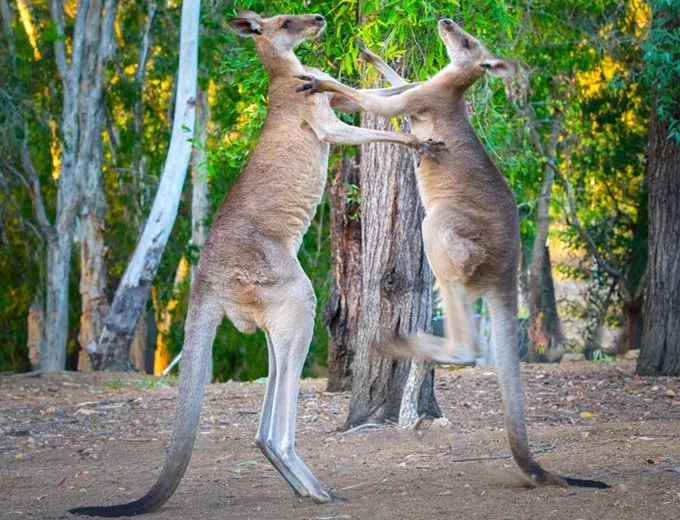
Marsupials give birth to tiny young at an early stage. The newborn finishes growing while attached to a nipple, usually inside a pouch on the mother’s belly. The Mammal Diversity Database counts 410 marsupial species in seven orders. Britannica puts some 200 of them in Australia, New Guinea and nearby islands, and about 70 in the Americas, mainly South and Central America. One, the Virginia opossum, ranges north through the United States into Canada.
Placental mammals carry their young in the womb, where a placenta passes food and waste between the mother’s blood and the fetus, so the young are well developed at birth. With 6,376 species they make up about 94 percent of all mammals, from shrews and bats to elephants, whales and humans.
The largest orders of mammals
Two orders hold almost two thirds of all mammal species. Rodents alone account for about 41 percent and bats for about 22 percent. The counts below come from the species list of the Mammal Diversity Database, version 2.5.
| Group or order | Species | Examples | What marks it |
|---|---|---|---|
| Monotremes | 5 | Platypus, echidnas | Lay eggs |
| Marsupials | 410 | Kangaroos, opossums | Tiny young, often a pouch |
| Placentals | 6,376 | Elephants, whales | Placenta feeds the fetus |
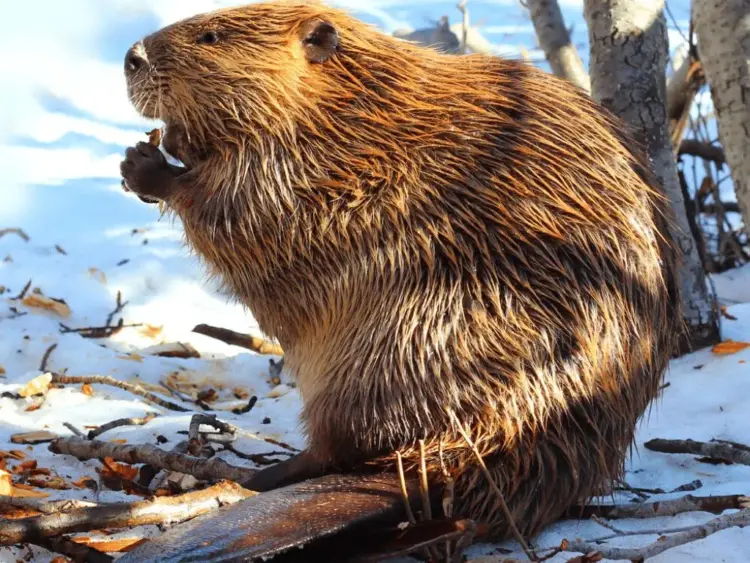
| Rodentia | 2,766 | Mice, squirrels, beavers | Largest order of all |
| Chiroptera | 1,506 | Fruit bats, bumblebee bat | Only mammals that fly |
| Eulipotyphla | 615 | Shrews, moles, hedgehogs | Includes Etruscan shrew |
| Primates | 510 | Lemurs, monkeys, apes | Includes humans |
| Artiodactyla | 368 | Deer, cattle, whales | Whales are placed here |
| Carnivora | 314 | Cats, dogs, bears, seals | Includes seals |
Rodents are the most numerous mammals in both species and individual animals, according to Britannica. Bats, the order Chiroptera, are the only group of mammals capable of true flight. The Mammal Diversity Database places whales and dolphins inside Artiodactyla, the order of even-toed hoofed mammals such as deer and cattle.
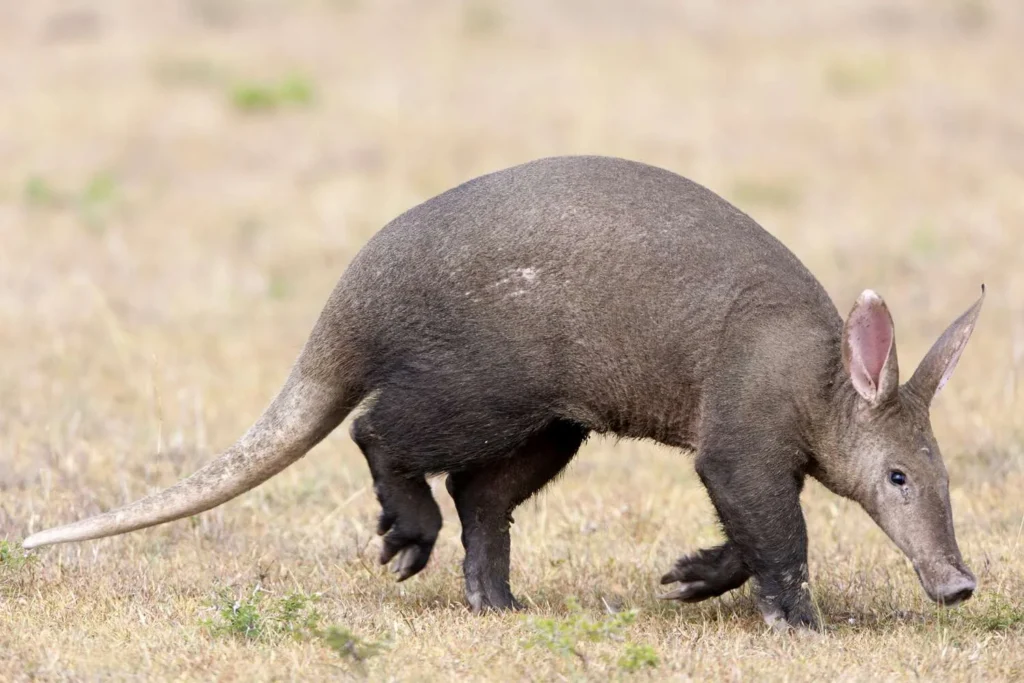
Some orders are tiny: the aardvark is the only living species of Tubulidentata, and Proboscidea holds just three elephants.
Mammal record holders
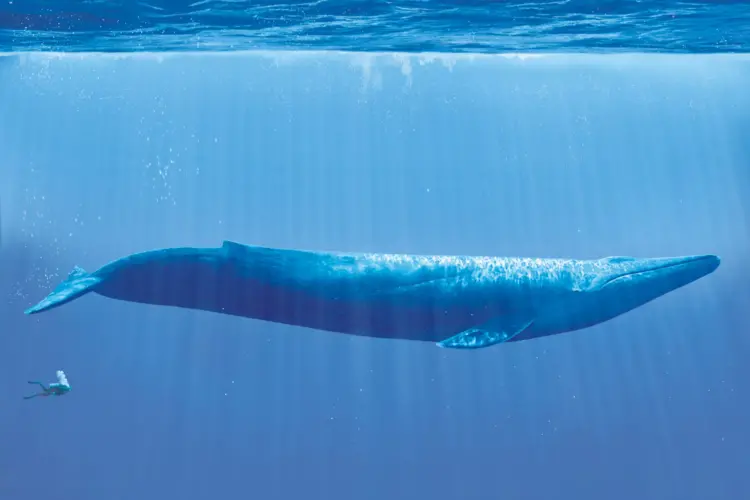
Largest animal: the blue whale is the largest animal on Earth. NOAA Fisheries gives it a length of up to 110 feet and a weight of up to 330,000 pounds, and estimates its lifespan at around 80 to 90 years.
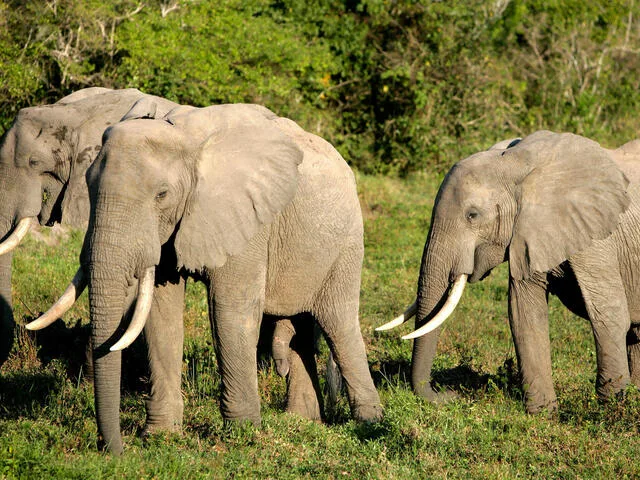
Largest land animal: the African bush elephant, also called the savanna elephant. Britannica gives its weight as 9,900 to 13,500 pounds. Its close relative, the African forest elephant, is smaller and is a separate species, not a subspecies.
Smallest mammal: it depends on how you measure. Guinness World Records names Kitti’s hog-nosed bat, or bumblebee bat, of western Thailand and southeast Myanmar the smallest mammal by length: 29 to 33 mm from head to rump and 1.7 to 2 grams. The Etruscan shrew, found around the Mediterranean and south to South Africa, is the smallest by mass at 1.5 to 2.5 grams, and the smallest mammal that cannot fly.
Fastest on land: the cheetah. The Smithsonian’s National Zoo says its top speed averages 60 to 70 miles per hour (96 to 112 km/h), but it can hold that pace for only about 300 yards.
Longest lived: the bowhead whale of the Arctic. A 1999 study that dated whales from chemical changes in their eye lenses estimated one animal at 211 years, with a possible range of 177 to 245 years. Guinness lists this as the oldest mammal on record, while noting that some scientists doubt how accurate the method is for the oldest whales.
Mammals covered on this site
In our list of animals that start with A you will find mammals such as the aardvark, the African bush and forest elephants, the aye-aye of Madagascar and the armadillos, along with domestic breeds such as the Abyssinian cat and the Afghan hound.
The list of animals that start with B covers the blue whale and the other baleen whales, the beaver, the bison, the Bactrian camel, the bandicoot and the baiji, a river dolphin of the Yangtze that has not been seen alive since 2002.
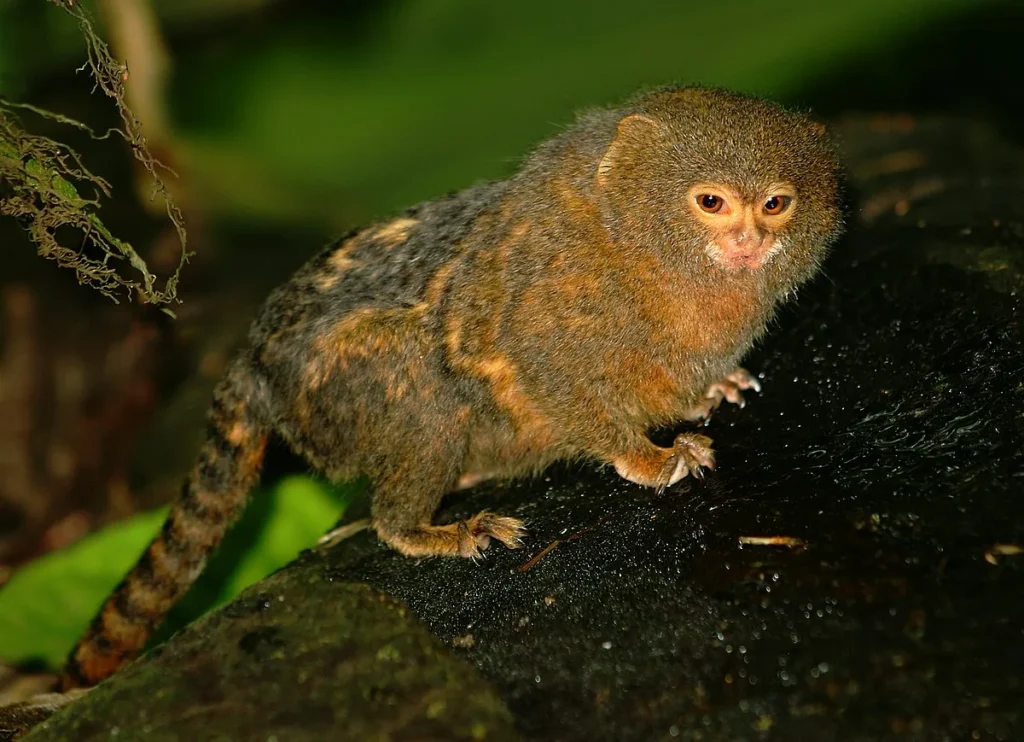
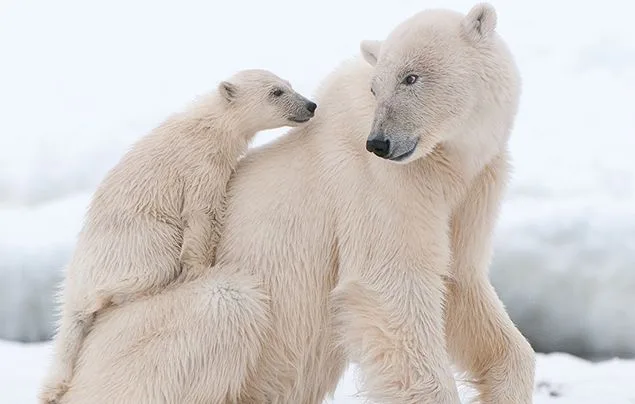
Several small mammals feature in our list of the cutest animals in the world, from the pygmy marmoset, the smallest monkey, to the quokka and the common wombat of Australia. Marsupials such as the eastern grey kangaroo and the greater bilby sit beside Arctic mammals such as the polar bear and the harp seal.
To browse every animal on the site, mammals or not, use the A to Z list of animals. Birds, the other large class of backboned animals covered here, have a hub page of their own: our guide to birds.
How many mammals are threatened?
On version 2026-1 of the IUCN Red List, the global record of extinction risk, 26 percent of assessed mammal species are in a threatened category (Vulnerable, Endangered or Critically Endangered), about one in four. Across all groups, the IUCN reported on 9 July 2026 that 49,505 of the 175,909 species on the Red List are threatened.
Recent updates show both losses and recoveries. In October 2025 the IUCN moved the hooded seal from Vulnerable to Endangered and the harp seal and bearded seal from Least Concern to Near Threatened, naming the loss of Arctic sea ice as the main threat. The same update listed the Christmas Island shrew as Extinct. In July 2026 the little bettong and four mulgara species, all Australian marsupials, were listed as Extinct, bringing modern mammal extinctions in Australia to more than 40. The same update moved the numbat, a marsupial and the faunal emblem of Western Australia, from Endangered to Near Threatened, with 2,000 to 3,000 animals now living in the wild after a low of about 300 in the late 1970s.
Mammals FAQs
What is a mammal?
A mammal is a vertebrate of the class Mammalia that feeds its young on milk from mammary glands. Mammals also have hair or fur, three bones in the middle ear and a lower jaw made of a single bone, the dentary.
How many mammal species are there?
The Mammal Diversity Database, version 2.5 of July 2026, recognises 6,791 living species, including 17 domestic ones. Counts change as new species are described or split, so other lists give slightly different totals.
Which mammals lay eggs?
Only the monotremes: the platypus and the four species of echidna. They live in Australia, Tasmania and New Guinea, and all other living mammals give birth to live young.
Are whales and bats mammals?
Yes. Whales and dolphins feed their calves on milk, and the Mammal Diversity Database places them in the order Artiodactyla. Bats form the order Chiroptera, the only mammals capable of true flight.
What is the largest mammal?
The blue whale, which NOAA Fisheries says reaches up to 110 feet and 330,000 pounds. It is the largest animal on Earth. The largest land mammal is the African bush elephant.
What is the smallest mammal?
Guinness World Records names Kitti’s hog-nosed bat of Thailand and Myanmar the smallest by length, at 29 to 33 mm and about 2 grams. The Etruscan shrew is the smallest by weight, at 1.5 to 2.5 grams.
How many mammal species are endangered?
On the IUCN Red List version 2026-1, 26 percent of assessed mammal species are threatened, meaning Vulnerable, Endangered or Critically Endangered. That is roughly one mammal species in four.
Sources checked in November 2026: mammaldiversity.org, britannica.com, animaldiversity.org, britannica.com (2), britannica.com (3), britannica.com (4), fisheries.noaa.gov, britannica.com (5), nationalzoo.si.edu, guinnessworldrecords.com, guinnessworldrecords.com (2), iucnredlist.org, iucn.org, iucn.org (2).