

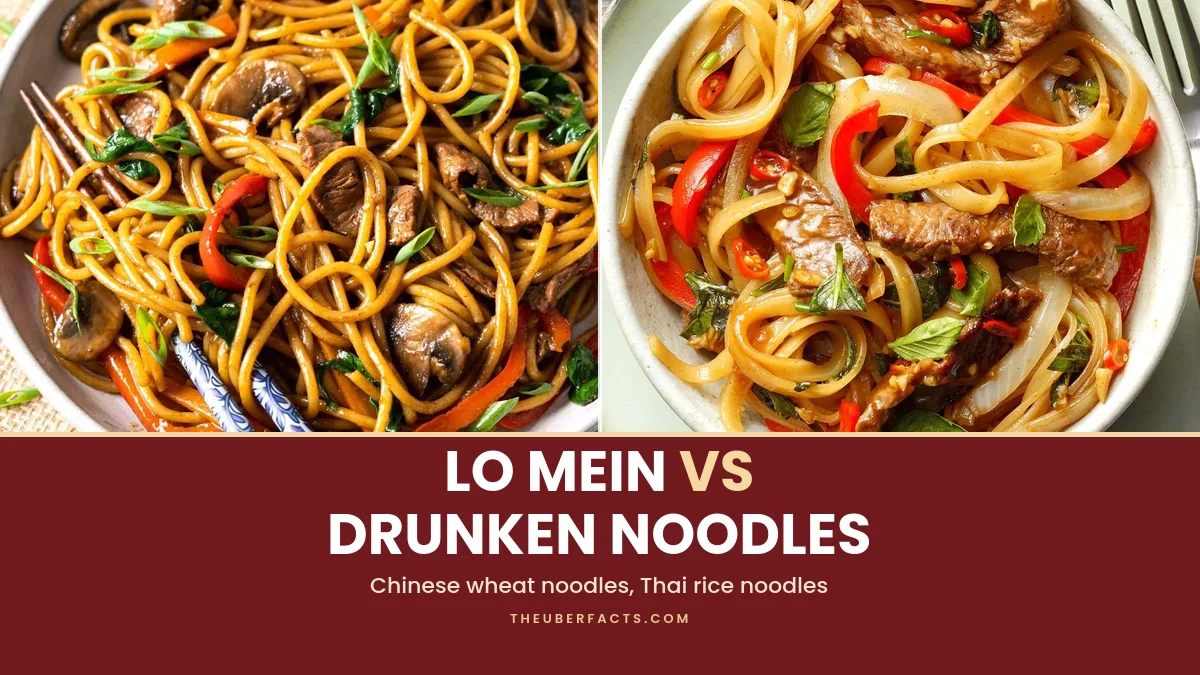
Lo mein (Cantonese 撈麵, lou mein) and drunken noodles (Thai ผัดขี้เมา, pad kee mao) both turn up on takeout menus in the United States, but they come from different countries and use different noodles. Lo mein is a Chinese dish from Cantonese cooking, made with wheat noodles that contain egg, tossed with a savoury soy and oyster sauce. Drunken noodles are a Thai stir fry of wide, flat rice noodles with holy basil and a lot of chilli. So the short answer to lo mein vs drunken noodles is: one is Chinese and wheat based and mild, the other is Thai and rice based and hot.
Lo mein vs drunken noodles at a glance
| Attribute | Lo mein | Drunken noodles |
|---|---|---|
| Country | China (Cantonese) | Thailand |
| Local name | 撈麵 (lou mein) | ผัดขี้เมา (phat khi mao) |
| Name means | Stirred noodles | Drunkard’s stir fry |
| Noodles | Wheat and egg noodles | Wide flat rice noodles |
| Contains gluten | Yes, the noodles | Noodles no, sauces often |
| Method | Boiled, then tossed | Hot wok stir fry |
| Sauce | Soy and oyster sauce | Soy, oyster, fish sauce |
| Herb | Spring onion | Holy basil or Thai basil |
| Heat | Mild | Hot, lots of chilli |
| Texture | Soft, springy, saucy | Chewy, slightly charred |
What is lo mein?
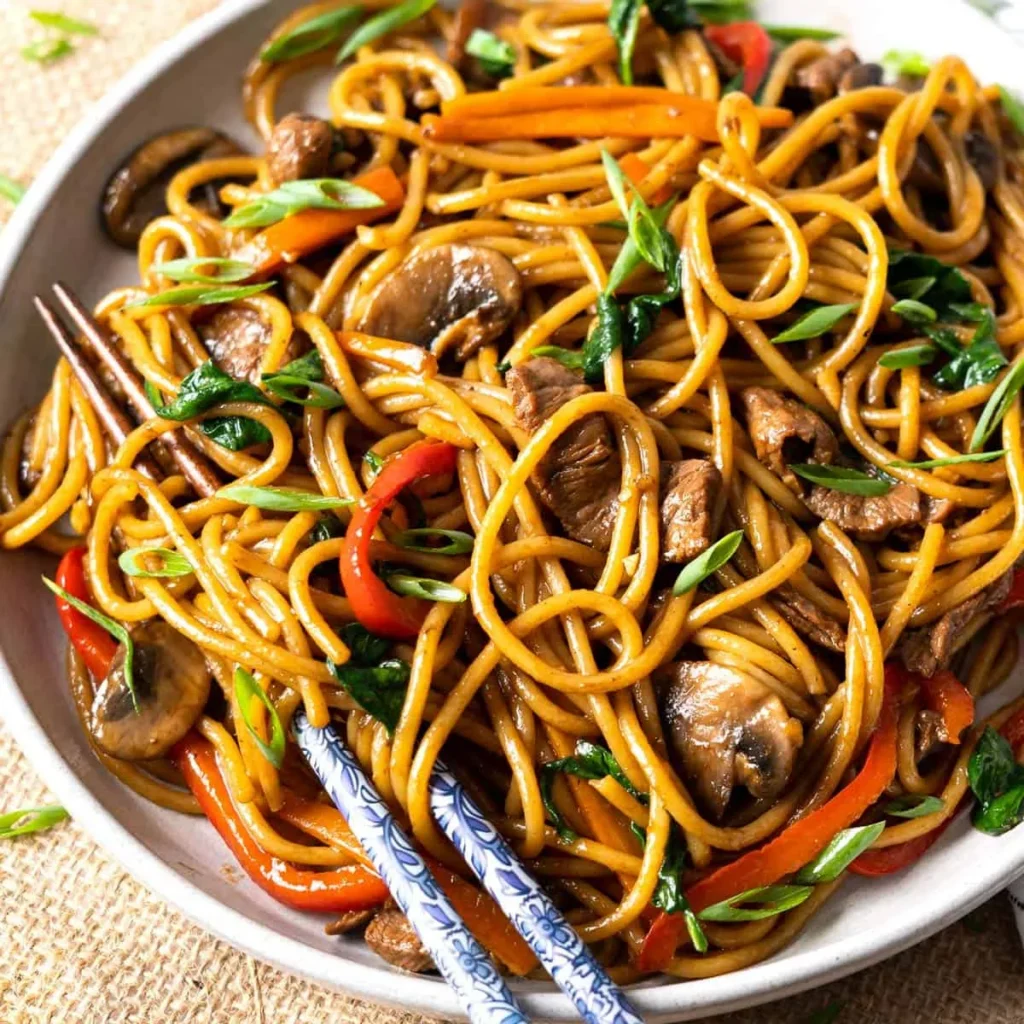
Lo mein comes from Cantonese cooking in southern China. The Cantonese name 撈麵 is usually translated as “stirred” or “mixed” noodles, and Food Network sums it up the same way: “lo” means stirred. The name describes the method. The noodles are cooked in water first and then mixed with the sauce and toppings, rather than fried until crisp.
In Cantonese cooking the dish is simple. Robert S. Bauer’s Cantonese dictionary, quoted on the University of Pennsylvania’s Language Log, defines lou mein as boiled wheat noodles that are strained and then usually seasoned with soy sauce or oyster sauce and chopped spring onion, sometimes with meat, fish or seafood on top. Wontons are a common side.
Lo mein in American Chinese restaurants
Cantonese immigrants brought their noodle dishes to the United States, and lo mein became one of the standard dishes of American Chinese takeout. The restaurant version is heavier and more of a meal in one dish. As The Woks of Life describes it, fresh wheat noodles made with egg are boiled, drained and then stir fried in a very hot wok with meat, vegetables and a sauce of light and dark soy sauce, oyster sauce, sesame oil, sugar and white pepper. Chicken, beef, pork, shrimp and mixed vegetables are the usual choices. Dark soy sauce gives the noodles their brown colour.
Lo mein is often confused with chow mein, its Cantonese cousin. Chow mein means “stir fried noodles”: the noodles are thinner and are fried until partly crisp, while lo mein noodles stay soft and coated in sauce.
What are drunken noodles (pad kee mao)?
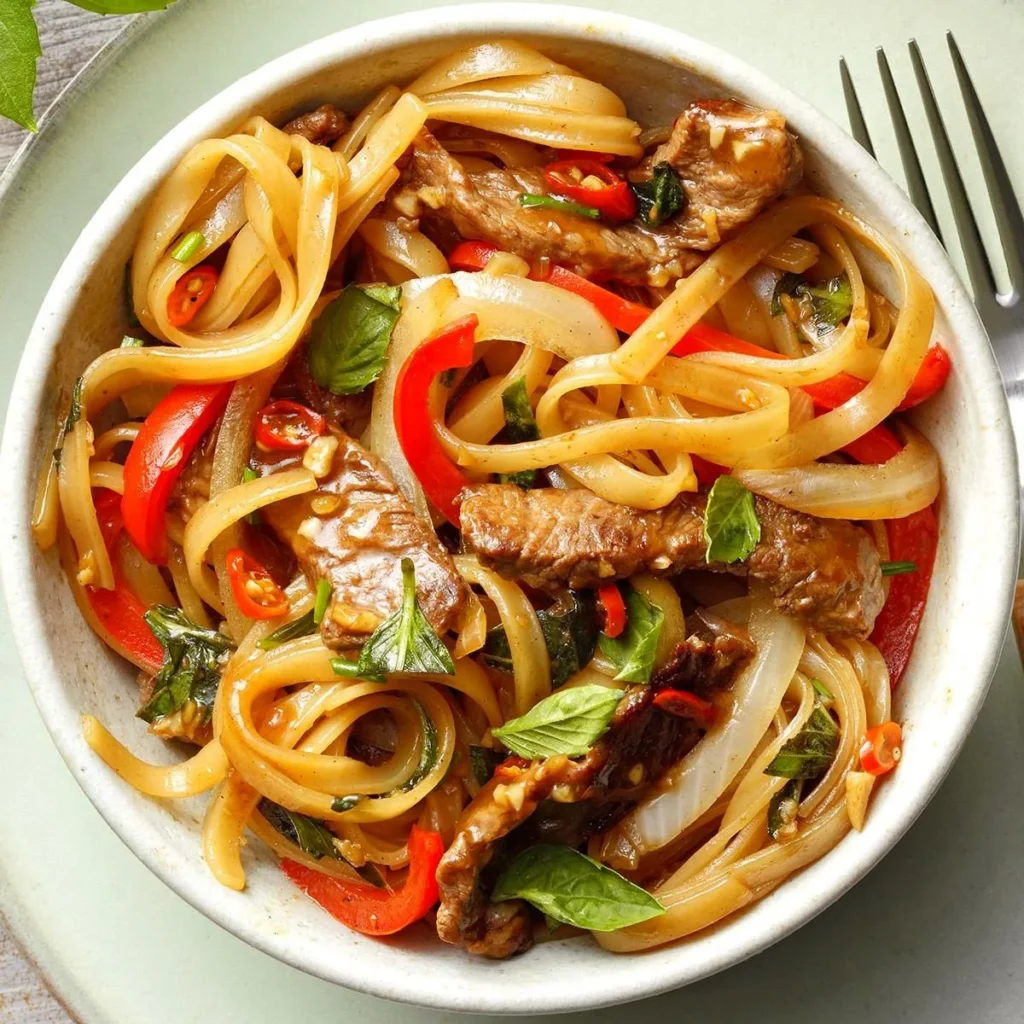
Drunken noodles are a Thai dish. In the Thai name phat khi mao, phat means to stir fry and khi mao means drunkard, so the name reads as “drunkard’s stir fry”. It is a Thai street food built on three things: wide rice noodles, chillies and basil. The noodles are sen yai, the fresh wide rice noodles also used in pad see ew, or dried extra wide rice noodles outside Thailand. They are fried over high heat with garlic, chillies, meat or seafood and a sauce of soy sauce, fish sauce, oyster sauce and a little sugar, then finished with a big handful of basil.
The traditional herb is holy basil (kra pao in Thai), which has a strong taste with a spicy edge. The Woks of Life notes that holy basil is hard to find in the United States, so most restaurants there use Thai basil, which tastes more of anise. Some cooks also add fresh green peppercorns or baby corn.
Why are they called drunken noodles?
There is no alcohol in the dish. Tasting Table lists the usual explanations: the noodles were cooked for people coming home from a night of drinking, the heat is strong enough to cut through a drunk person’s dulled palate, it is eaten as a hangover cure, or it goes well with a cold beer. No one knows which story is true. Tasting Table also points out that in Thailand the same spicy basil stir fry can be served with rice, so you may need to ask for the noodle version.
The English name matters to diners. A 2017 study from Ohio State University and Penn State, published in Cornell Hospitality Quarterly, used “Pad Kee Mao” and “Drunken Noodles” as one of its test pairs and found that some diners reacted less well to menus that used only the Thai names.
The main differences between lo mein and drunken noodles
Origin. Lo mein is Chinese, from Cantonese cooking, and spread abroad through Chinese restaurants. Drunken noodles are Thai. They are not related dishes; they only share a wok and a place on many takeout menus.
Noodles. This is the biggest difference. Lo mein uses fairly thick wheat noodles made with egg, which are soft with a springy bite. Drunken noodles use wide, flat rice noodles that turn chewy and pick up dark, slightly charred spots in a hot wok.
Cooking method. Cantonese lo mein is boiled and tossed, not fried hard. The American restaurant version is tossed through a hot wok with the sauce but stays soft. Drunken noodles are stir fried over very high heat so the noodles take on the smoky taste of the wok.
Sauce and flavour. Lo mein tastes savoury and slightly sweet from soy sauce and oyster sauce, with sesame oil and spring onion. Drunken noodles add fish sauce to the soy and oyster sauce, and the flavour is led by chilli, garlic and basil.
Heat. Lo mein is mild and is not meant to be spicy. Drunken noodles are meant to be hot; heat is the point of the dish, though fewer chillies make it milder.
Herbs and vegetables. Lo mein takes whatever vegetables the cook has, with spring onion as the classic finish. Drunken noodles rely on basil, chillies and garlic, which are part of the dish rather than extras.
Gluten
Lo mein is not gluten free, because the noodles are made from wheat. The Celiac Disease Foundation lists egg noodles and chow mein noodles as sources of gluten, while rice noodles are gluten free. That does not make drunken noodles safe by default: the same foundation lists traditional soy sauce as a source of gluten, and many Chinese and Thai sauces are made with it. Anyone avoiding gluten should ask the kitchen to use tamari or a gluten free sauce.
Which one should you order?
Order lo mein if you want soft noodles, a gentle savoury sauce and plenty of vegetables, or if you are feeding someone who does not like spicy food. Order drunken noodles if you want chilli heat, the fresh taste of basil and chewy wide noodles with some char.
If you like the wide rice noodles in drunken noodles but not the heat, the milder Thai choice is pad see ew, another stir fry of wide rice noodles. The two are compared in detail in our guide to drunken noodles vs pad see ew, so the details are not repeated here.
Related noodle dishes
Thailand has other wide rice noodle dishes too. Lad na serves the same sen yai noodles under a thick gravy, explained in how lad na differs from pad thai. Thin rice noodles are used in a different way in Vietnam, covered in the difference between bun and pho noodles. And if your takeout order includes rolls as well as noodles, see Chinese egg rolls vs Vietnamese egg rolls.
Lo Mein and Drunken Noodles FAQs
Is lo mein Chinese or Thai?
Lo mein is Chinese. It comes from Cantonese cooking in southern China and became a standard dish in American Chinese restaurants. Drunken noodles are the Thai dish.
What is the main difference between lo mein and drunken noodles?
Lo mein uses wheat and egg noodles tossed in a mild soy and oyster sauce. Drunken noodles use wide rice noodles stir fried with chillies, garlic and holy basil, so they are much spicier.
Do drunken noodles contain alcohol?
No. The Thai name phat khi mao means drunkard’s stir fry, and the usual stories link it to people who have been drinking, not to alcohol in the food. Some recipes outside Thailand add a splash of Chinese cooking wine, but the dish does not need it.
Is lo mein spicy?
No. Lo mein is seasoned with soy sauce, oyster sauce and sesame oil and is mild. Restaurants may add chilli oil if you ask, but heat is not part of the classic dish.
Are drunken noodles gluten free?
The rice noodles are gluten free, but the dish usually is not, because regular soy sauce is brewed with wheat. Ask for tamari or a gluten free sauce if you need to avoid gluten.
What noodles are used in lo mein?
Lo mein uses wheat noodles made with egg, often sold fresh in Asian grocery stores. They are boiled first and then mixed with the sauce, meat and vegetables.
What kind of basil goes in drunken noodles?
Holy basil (kra pao) is the traditional choice in Thailand. Outside Thailand, many restaurants use Thai basil instead because holy basil is hard to find.
Sources checked in November 2026: foodnetwork.com, languagelog.ldc.upenn.edu, thewoksoflife.com, en.wikipedia.org, en.wikipedia.org (2), thewoksoflife.com (2), tastingtable.com, splendidtable.org, news.osu.edu, celiac.org.